
By Admin, Published on 2 months ago
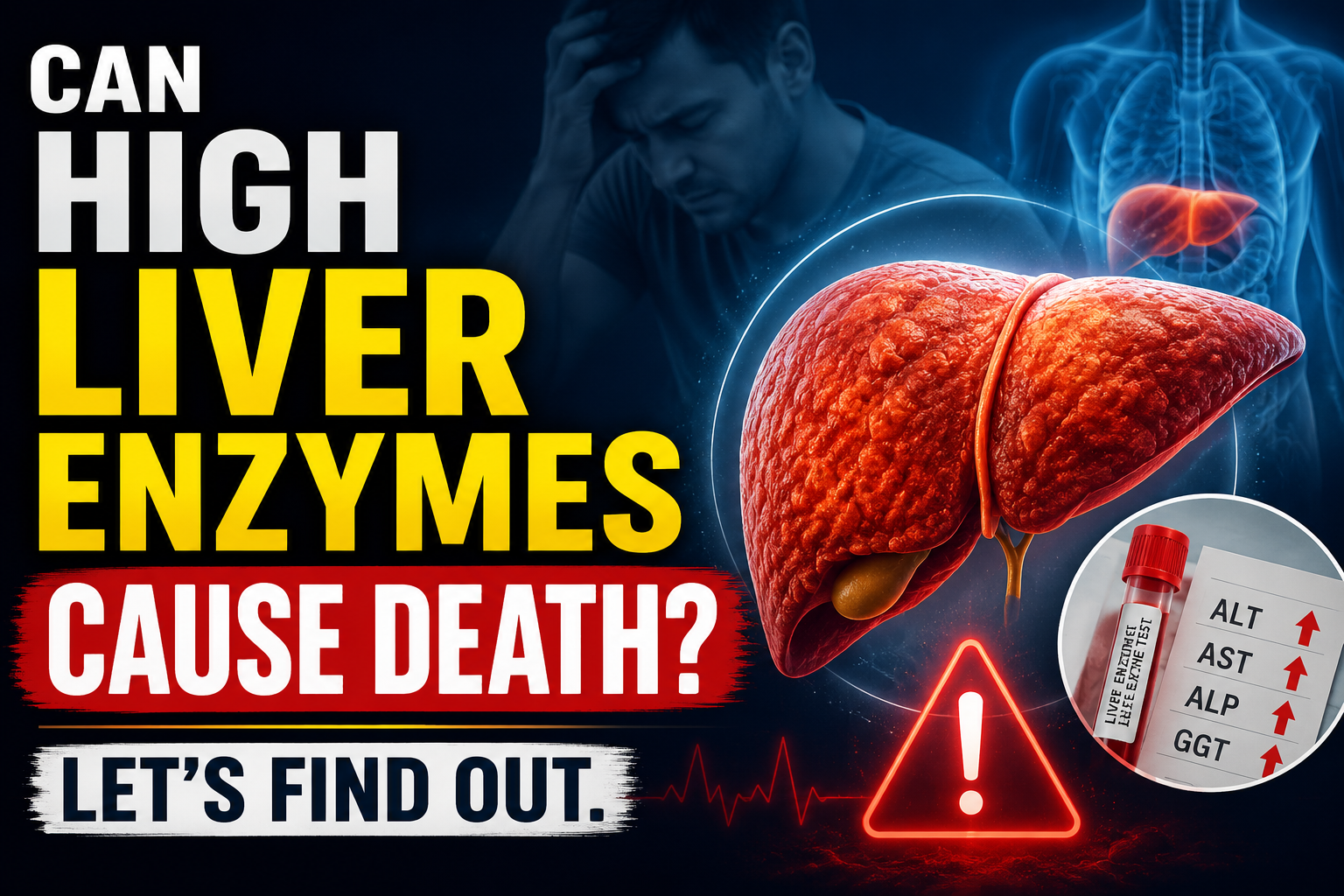
Can High Liver Enzymes Cause Death? Let’s Find Out.
TL; DR: Can high liver enzymes cause death? No, not by themselves, but untreated liver disease or acute liver failure, which causes increased levels of liver enzymes, can quickly become life-threatening if not diagnosed and treated promptly.
Getting your blood test results and seeing an ominous red flag next to “elevated liver enzymes” has got to be one of the worst feelings in the world. Your heart sinks at the thought that your liver may be shutting down: is something seriously wrong? Could this be life-threatening? Am I going to die?
Before you assume the worst, take a closer look at what your test results mean in actuality.
Thankfully, there is no shortage of free health and fitness calculators online to learn more about different health metrics, including liver-related values. You can use the educational insights they provide to and formulate more informed questions for your visit to the doctor’s. Keep in mind though that these tools aren’t intended to diagnose medical conditions, and hence, they are no substitute for a professional medical evaluation or diagnosis.
In this article, we’ve rounded up everything you need to know about liver enzymes; what causes them to increase, what your abnormal results could mean and how you can reverse the damage and prevent complications. There are few other commonly asked questions too, so let’s get started!
What Are Liver Enzymes?
Your liver never stops to take a rest. It's working hard 24 hours a day to rid your body of toxins, process the medications you take, store the energy you need and make vital proteins to keep your body running. Inside those liver cells, enzymes do most of the hands-on work.
When your liver cells become injured or inflamed, certain enzymes leak out into your blood in abnormally large quantities, and this is precisely what the blood test is checking.
But which blood test shows liver enzymes? Most of the time, it’s a liver function panel (or as most people refer to it, LFT, which is short for liver function test). It measures the following:
ALT (alanine transaminase) is found mostly in your liver, so this is a relatively good indicator of liver damage
AST (aspartate transaminase) is found in your liver, as well as in heart and muscle, so it is less specific than ALT
ALP (alkaline phosphatase) exists throughout your body but is highly concentrated in liver and bones. High ALP levels indicate liver damage, a blocked bile duct, or bone diseases.
GGT (gamma-glutamyl transferase) is also found in the liver and other organs and is sensitive to alcohol and bile duct problems, so doctors often read it together with ALP to zero in on the cause.
Most blood tests also measure the amount of bilirubin, which is not really an enzyme but which reflects how effectively your liver is removing wastes. This result is also read in the context of other test values.
While all the markers perform a unique role, AST and ALT are frequently assessed together, as the ratio between them may give more information about specific liver disorders. This is the reason why there are AST/ALT ratio calculators to go with liver function tests, but not the calculators of other liver enzymes.
What Are the Normal Ranges of Liver Enzymes?
The most common reference levels for liver enzyme blood tests for adults are more or less the same around the world, although there may be minor variations between different laboratories:
ALT: 7-55 U/L
AST: 8-48 U/L
ALP: 45-115 U/L
GGT: 8-61 U/L
They may also change according to age, gender, muscle mass, and even laboratory equipment being used, which is why it is best to always compare them to the ones from your blood test and the range provided by your healthcare provider.
A liver enzyme level that is one or two times above the upper limit of the normal range does not necessarily point to a serious liver problem. However, values that are several or even tens of times higher should be evaluated to determine the origin of the abnormality.
What Causes High Liver Enzymes?
There is a broad range of factors that can contribute to increased levels of liver enzymes. Thankfully, most of them can be effectively treated or managed:
Fatty liver disease, associated with overweight, insulin resistance, or alcohol abuse is one of the most common causes nowadays
Viral hepatitis infection with any of the hepatitis viruses (A, B, C)
Drug-induced liver injury presents another significant etiology since numerous medications (NSAIDs, antibiotics, statins, some herbs) can cause transient or even severe elevation of liver enzymes
Alcohol-related liver disease is also a recurring cause of liver damage
Autoimmune conditions, where the person’s immune system attacks liver cells
Bile duct obstruction, due to gallstones or tumors, is associated with increased ALP and GGT rather than ALT and AST
Cirrhosis, advanced liver disease characterized by connective tissue formation within the liver, sometimes resulting from chronic hepatitis or fatty liver disease.
It is also important to differentiate between transient (intermittent) and chronic (persistent) elevation of liver enzymes. Transient elevations tend to appear suddenly and resolve once the source of the problem is removed, whereas chronic elevations warrant a more thorough diagnostic evaluation and appropriate treatment.
What Happens When Your Liver Enzymes Are High?
A higher-than-normal amount of enzymes simply tells the doctor that there is an increase in the release of these chemicals from liver cells. It does not indicate the exact reason for this anomaly, nor does it show the degree of damage to the cells. Many people may have slightly higher levels of enzymes and not show any symptoms whatsoever. In others, fatigue, nausea, discomfort in the right upper quadrant of the abdomen, yellow eyes and skin (jaundice), if bilirubin is also on the higher side.
Doctors divide elevations roughly into the following types:
Mild: (up to two or three times the upper limit of normal) generally indicates fatty liver, discontinuation of certain medications, or binge drinking.
Moderate: (three to ten times the upper limit) may require additional tests to determine the underlying cause.
Severe: (more than ten times the upper limit) may be a sign of acute liver injury and require immediate medical attention.
The increase in one or another enzyme helps the doctor to determine the location and level of damage; therefore, it is not enough to just know the level of liver enzymes.
What Cancers Cause High Liver Enzymes?
Cancer is not the only potential cause of increased liver enzymes - in fact, it is relatively rare. Nevertheless, physicians do consider the possibility when initial tests show consistently high levels. Cancer may raise liver enzymes in several ways, for instance, if it develops in the liver itself, or if it originates elsewhere in the body and spreads to the liver via the lymphatic or blood circulation system. This may happen, for example, with colorectal, pancreatic, or breast cancer. In addition, tumors that develop outside the liver may also cause obstruction of the bile ducts, preventing the bile from emptying properly.
Nevertheless, it is crucial to note that an isolated increase in liver enzymes is not an indicator of cancer. In fact, the phenomenon is not specific to malignancy, and there are a number of much more common liver conditions that may have similar effects. Moreover, if cancer is indeed the reason behind it, your doctor is unlikely to attempt a diagnosis based on liver enzyme tests alone.
Can High Liver Enzymes Cause Death?
This is the question that most people are asking, and the answer mainly depends on what is causing the increase in liver enzymes, and how far it has progressed.
An isolated increase in liver enzymes, as seen on a routine blood test, with no other symptoms is rarely life threatening. It is more of a signal that something may be wrong, and it needs to be looked into.
On the other hand, liver failure, or the loss of liver function, can occur acutely, and can be fatal if not treated. This is a relatively uncommon outcome and can result from an untreated underlying condition or a severe viral infection that damages the liver.
In short, one cannot determine how bad the situation is based on the number alone, and one should always consult a medical professional if liver enzymes are found to be high, and especially if other symptoms accompany it. In addition, one should not try to self-diagnose based on some of the information found here or elsewhere on the web.
How Can You Lower Elevated Liver Enzymes Fast?
Unfortunately, there is no magic cure that brings liver enzymes down in one day. Moreover, it is difficult to know for sure what led to their increase. Nevertheless, some measures are proven to help reduce liver enzymes back to normal within a short period of time if a particular reason for their increase is known. Here are the most common ways of bringing liver enzymes down:
Eliminate or limit alcohol consumption.
If possible, stop using drugs that may be harmful to the liver at a higher dose or under certain conditions, but make sure to consult a physician on the issue before discontinuing any medications or supplements.
Reduce weight and normalize blood sugar levels if diagnosed with fatty liver disease.
Drink plenty of fluids and eat healthy food. Include vegetables, fiber, and protein in your diet.
Complete any course of anti-viral, anti-parasitic, or other medications suggested by a doctor if you have an infection that may be the cause of elevated liver enzymes.
In most cases, following these guidelines for a week or more will bring liver enzymes back to normal, but if you have issues of a different kind, it may take longer.
Always remember that the liver is a resilient organ but it needs time to heal. Therefore, if you come across any advertisement claiming to offer a complete recovery from elevated liver enzymes in just a few days, do not believe the salesperson; chances are they are not aware of the real reasons for the liver dysfunction.
How Are High Liver Enzymes Diagnosed and Monitored?
If your first test results are high, your doctor will most probably ask for a follow-up test after a few weeks to see if the results are increasing or decreasing. If they continue to be high, you may need additional tests, such as:
A full liver panel, which checks your albumin, bilirubin, and clotting function, among other things
An ultrasound or other imaging to look for fatty changes, blockages, or masses
Viral hepatitis screening
And/or a liver biopsy for a definitive diagnosis
These tests allow your doctor to identify whether your results are a harmless one-time thing or if it's a chronic issue that will need ongoing management.
More FAQs
1. Which medical conditions commonly cause high liver enzymes?
High levels of enzymes can occur due to many reasons: fatty liver, viral hepatitis, alcohol abuse, autoimmune liver disease, or liver damage due to drugs/toxins. It can also be caused by obesity, diabetes, or a genetic disorder. Your doctor will be able to find out the exact cause through further evaluation and testing.
2. When should I be worried about mildly elevated liver enzyme levels?
When they are mildly elevated, liver enzymes may not be a problem for they can be triggered by intense physical activity, certain medications, or unrelated infections. That being said, you should consult a doctor if they remain high, fluctuate, or are accompanied by other concerning symptoms.
3. What follow-up tests should I get after abnormal liver enzymes?
Based on your symptoms and history, your doctor might suggest a repeat of the liver function tests along with a hepatitis test, ultrasound and further blood work to diagnose liver conditions and identify the cause of these abnormal results.
4. How long does it take for liver enzymes to return to normal?
It depends on the root cause for the abnormality in enzyme levels. In case of any temporary problem, or once the hepatotoxic drug is discontinued, the enzymes can go back to normal levels in a few weeks. If the condition is chronic, however, it may take several months for the liver enzymes to return to normal, and long-term treatment and lifestyle changes may also be required.
5. Can prescription drugs or supplements raise liver enzyme levels?
Yes. Some prescription drugs, over-the-counter pain relievers, herbal medicines, and even excessive vitamin intake can increase liver enzymes. Usually, there will be an improvement once the drug is stopped upon advice from a doctor. Always seek the advice of your physician when you plan to stop a prescribed medicine or take new supplements.
Wrapping Up
Liver enzyme values should never be interpreted in isolation. Elevated liver enzyme levels alone cannot provide a complete diagnosis because it is possible for your symptoms and test results to suggest one condition when another medical condition is the real culprit.
In other words, your liver enzyme levels are only one part of the diagnostic process. Consult a healthcare professional who will interpret your results in the context of your medical history, physical examination, and other laboratory or imaging findings and recommend any additional tests that may be needed for an accurate diagnosis and treatment plan.
When to seek urgent care
If you experience any of the following symptoms, contact an emergency service rather than your primary care physician:
severe pain in the abdomen
altered levels of consciousness
rapid development of jaundice (yellow eyes and skin)
vomiting blood
noticing dark streaks in the toilet after vomiting or having a bowel movement